For wellbeing & supportwellbeing teams · student support · counsellors
Find the students who need you, before they stop asking
You cannot check in with every student, one by one, every term. StudentPulse can. Every reply is read the moment it arrives, so signals of crisis and declining wellbeing surface early and students are guided to support, instead of waiting for them to ask.
Every reply read on arrival. Signals surface early and students are guided to support.
Our guide to moving from crisis response to proactive wellbeing. Free, straight to your inbox.
88% avg. completion · anonymity thresholds on every view · EU-hosted
Signals as replies arrive
Real-time
2
Potential crisis signal
Social sciences, 2nd semester · flagged 08:12
"I have not been to campus in two weeks and I do not see the point anymore."
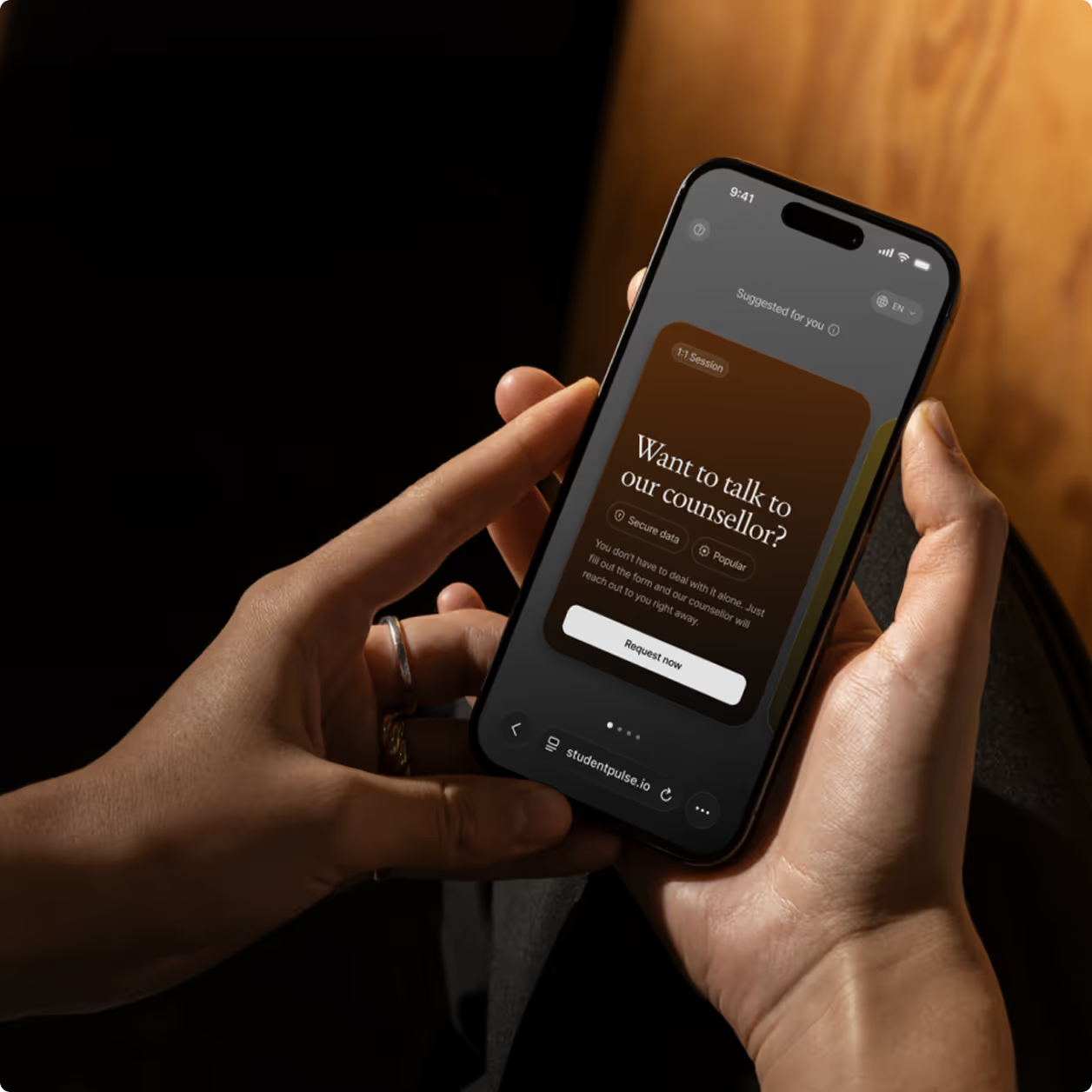
Automatically: Shown crisis resources and a private route to your on-call service, the moment it arrived.
Engagement: Opened the resources, then reached your service directly through the private form, on their own terms.
3
Repeated low wellbeing
Humanities, 1st semester · 3rd low check-in in a row
"Everyone seems to have found their group except me."
Automatically: Guided to a belonging self-help pack and the peer-mentoring sign-up.
Engagement: Opened the self-help pack and viewed peer mentoring twice this week.
5
Workload strain, whole class
Engineering, 4th semester · 21 similar comments
"All three deadlines landed in the same week again."
Automatically: Cohort flagged to the programme team, with study-skills resources shared to the group.
Engagement: 68% of the class opened the shared resources within three days.
Live demo. Signals are flagged as replies arrive and students are guided to matched support automatically. Identifying students is optional: run it anonymous, or connect identities so follow-up can be personal, configured per institution.
Trusted by 65+ European institutions
Signals as replies arrive
Real-time
2
Potential crisis signal
Social sciences, 2nd semester · flagged 08:12
Automatically: Shown crisis resources and a private route to your on-call service, the moment it arrived.
Engagement: Opened the resources, then reached your service directly through the private form, on their own terms.
3
Repeated low wellbeing
Humanities, 1st semester · 3rd low check-in in a row
Automatically: Guided to a belonging self-help pack and the peer-mentoring sign-up.
Engagement: Opened the self-help pack and viewed peer mentoring twice this week.
5
Workload strain, whole class
Engineering, 4th semester · 21 similar comments
Automatically: Cohort flagged to the programme team, with study-skills resources shared to the group.
Engagement: 68% of the class opened the shared resources within three days.
The problem
By the time you hear about it, it is often too late
Wellbeing teams are asked to reach every student with a fraction of the hours it would take, and the students who most need you are the hardest to see.
Too many students, too few of you
You cannot have a one-to-one with every student every term. The ones who quietly disappear are the ones you never got to.
The struggle hides in the average
A healthy cohort average can mask the handful sliding toward crisis, and an annual survey surfaces it months too late.
Support that goes unused
The students who most need help often do not know your services exist, or will not reach out on their own.
The shift
Trade the once-a-year survey for check-ins that reach students in time
An annual survey surfaces distress months after it mattered, when the students have already slipped away. StudentPulse replaces it with short, continuous check-ins, read the moment they arrive, so signals surface early and students are guided to support while it still changes the outcome.
Swipe for more
01 · Micro check-ins
Students answer, a little and often
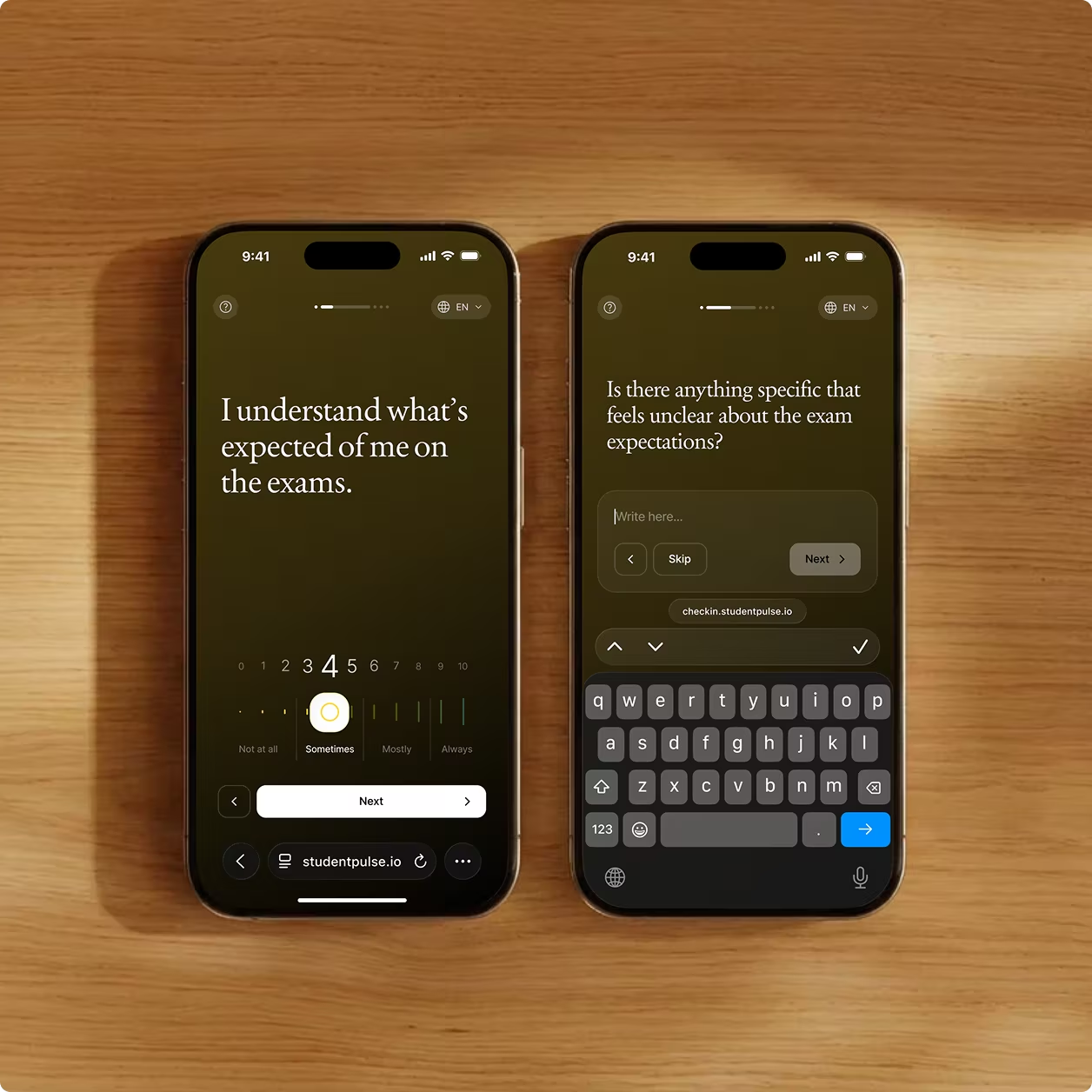
A short check-in around three times a semester, roughly a minute on a phone: a few scores and a line in their own words. It feels more like a conversation than a survey, which is why most students answer.
02 · Read and mapped
Every reply, read on arrival
The AI reads each answer the moment it lands, flags crisis and declining-wellbeing signals, and maps it to the shared data model, by programme and cohort.
03 · Support, automatically
Students are guided to help
Below crisis level, students are guided to matched self-help and your own services; anything urgent gets a private route to your team the moment it appears. Your view below is that loop.
Monday morning, annual-survey world
Monday morning, with StudentPulse
Read whatever landed in the inbox, the students who wrote are rarely the ones who need you.
Rely on teachers noticing absence, weeks in.
Learn in June what September felt like, from the annual survey.
Your Observations digest is already in your inbox: the few cohorts and signals that need you this week, ranked, with the students’ own words attached.
Anyone whose answer signalled a crisis was shown help and a private route to your service the moment it arrived, overnight included.
Everyone below that already had self-help and your own services matched to what they raised, so support was moving before you sat down.
See it in the product
The whole loop, in one place
One connected loop: from the help a student gets the moment they answer, to students seeing their feedback turn into change.
Swipe for more
1
Students get help the moment they answer
Matched self-help, and a private route to a 1:1 with your service, shown straight away.
2
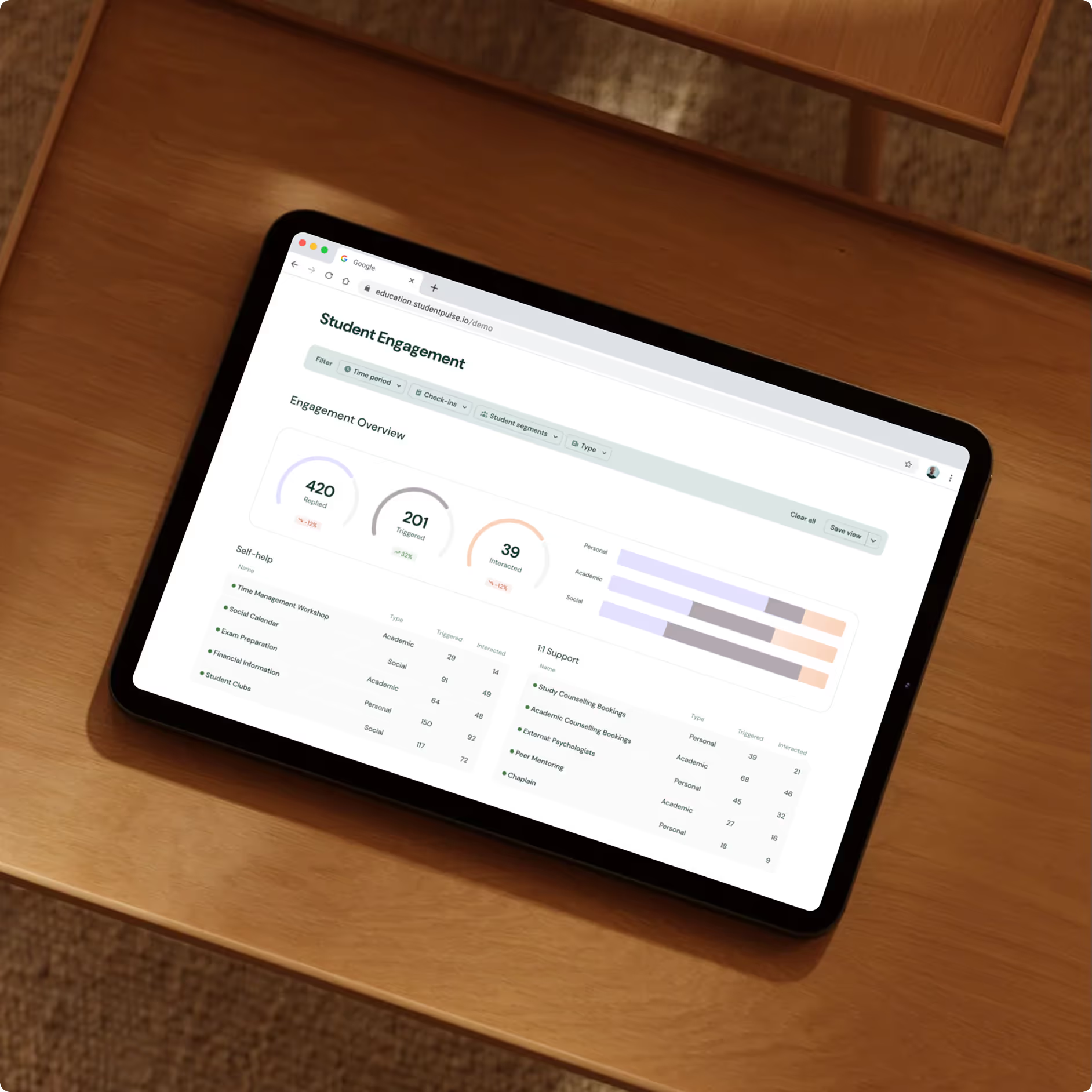
See uptake across every cohort
How many students opened self-help or booked a 1:1, cohort by cohort, on the wellbeing scale.
3
AI turns comments into actions
Every open comment is read and summarised into recommended actions, each backed by the students’ own words.
4
Students see their feedback lead to change
Show students how you’re working with what they shared, so they keep sharing next time you ask.
The cohorts that need you, surfaced every Monday morning
Every night Observations reads your whole account and brings you the few things that actually need a decision, ranked and written for you. The wellbeing digest is who is struggling, and whether they are reaching the support you offer.
1Reads it all, nightly. Every check-in across your account, scores and open comments alike.
2Finds what changed. A programme slipping, a cohort below benchmark, a signal worth a look.
3Ranks and routes. Each finding ranked by urgency and written for you, in-app and a Monday digest.
4Email it on, or act. Send an observation straight to a colleague, or resolve, snooze, or dismiss it yourself.
StudentPulse· Weekly digest1 of 3 · Monday, 08:00
TopicAct now
First-year Humanities: sense of belonging has dropped to 4.9
4.9Now
−1.5
6.4Last year
6.0Baseline
96 replies
On “I feel part of a community here” first-semester Humanities sits at 4.9, its lowest of the year and down 1.5 since September. Belonging self-help and peer mentoring are already offered to the cohort, so uptake is the thing to watch. Recommended next step: a word with the programme lead about attendance.
First-year Humanities
Explore
BenchmarkInvestigate
Stress is running above the sector benchmark across Engineering
5.4Now
−0.9
6.5Sector
130 replies
Engineering cohorts report stress well above the sector benchmark for this point in the term, driven by clustered deadlines in the comments. Study-skills sessions and spreading assessment have helped other faculties. Worth a coordinated look before the assessment block.
Engineering, all years
Explore
TopicFix
Exam anxiety is spiking in Nursing and Law ahead of finals
4.6Now
−1.3
5.9Baseline
84 replies
On "I feel able to cope with exam pressure" second- and third-year Nursing and Law have dropped to 4.6 in the run-up to finals, with comments naming sleep and workload. Exam-stress workshops and counselling drop-ins are already offered; the step here is making sure both cohorts see them before the assessment window.
Nursing and Law, senior years
Explore
Advisory by design: Observations flags, ranks and explains. You decide: act on it, email it to a colleague, snooze, or dismiss, with a trail of who resolved what. Illustrative example.
For students
Light to answer, built to be trusted
A check-in feels more like a quick conversation than a form: about a minute on their phone, a few scores and a line or two in their own words, asked a little and often across the term rather than everything at once. That is why 88% answer, and why the signals you act on are honest.
About a minute to answer, on phone, tablet, or laptop.
A mix of scores and one-line comments, more chat than survey.
Smart timing across the term, so students are asked a little, often.
Built to be trusted
Support, not surveillance
Students answer honestly because the system is built to protect them, not watch them. That is the difference between feedback students trust and a survey they ignore.
Minimum group sizes are enforced on every aggregate view, so no individual is singled out from ordinary reporting.
Anonymous or identified, your choice
Run StudentPulse fully anonymous, or connect student identities so support and follow-up can be personal. Identifying students is optional, configured per institution, with role-based access throughout.
EU-hosted, GDPR-built, DPA ready
Student data stays in the EU, with a standard DPA and subprocessor list your DPO can review up front.
One shared framework
It all maps to one data model
Behind every check-in sits one research-based framework: three domains, academic, personal, and social, broken into 38 topics and 155 subtopics. Every question is tagged to the same place, so feedback stays comparable across cohorts, terms, and the wider sector, and any single subtopic can be followed as one line over time.
Because every check-in maps to the same framework, a single subtopic reads as one line across the year. You see the dip, the support you put in against it, and whether wellbeing actually recovered, not a memory of it months later.
2nd year social sciences · one academic year · 6 check-ins
7.2↑ 0.7 over the year
Oct signal → peer mentoring at study start.A study-start belonging gap flagged in the first month. A peer-mentoring round and cohort activities followed, and belonging recovered past where it started by spring.
Illustrative data · every point maps to the same subtopic in the framework.
Insights across the sector
Your numbers mean more next to everyone else's
See how your cohorts sit against the wider dataset.
Every check-in maps to one shared framework, so your wellbeing themes benchmark against comparable institutions, and you see what is already helping students elsewhere, straight from them. The anonymized dataset makes each institution’s own numbers mean more.
And you are not on your own with it. Your StudentPulse partner helps you read the signals, prioritise outreach, and tune check-ins to your context, while the sector view surfaces which kinds of support actually helped students elsewhere. Software, plus the people and research behind it.
Aggregate and anonymized. No institution or student is ever identified, and no student IDs are stored.
On the factors StudentPulse measures, students who thrive show up to a 19 percentage point lower dropout risk (EVA, the Danish Evaluation Institute). StudentPulse surfaces those signals in continuous check-ins, early enough to act on them. Early support is the right thing for students, and it protects the funded places behind them.
Traditional wellbeing surveys are long, rare, and mostly tell you what happened last semester. StudentPulse uses short check-ins that feel more like a quick conversation than a form, so you get a continuous picture of stress, belonging, and motivation, and can see problems as they appear instead of months later.
Yes, if you choose to. StudentPulse can run fully anonymous, or you can connect student identities so support and follow-up can be personal. Identification is optional and configured per institution. Aggregate reporting keeps minimum group sizes on every view and access is role-based, so privacy holds either way.
You define which score and comment combinations count as a signal in your context, and the platform groups them so your team focuses on what matters most. Many teams combine cohort views for lighter group initiatives with individual signals for outreach, and your Customer Success partner helps tune the settings so the volume fits your capacity.
No. It makes sure your counselling hours reach the students who need them, sooner. Detection and prioritisation are the platform; the care is still yours.
A short conversational check-in around three times a semester (a dialogue with students, the baseline rather than a fixed schedule), a few minutes on their phone. Average completion is 88%, because it feels like being asked, not being surveyed.
The flag is raised the moment the answer arrives, and the student is immediately shown help resources and a direct route to the right service. Depending on how your institution has configured StudentPulse the signal can stay anonymous or be tied to the student, so your team can follow up in the way your policies allow.
Yes. Start from StudentPulse templates grounded in research, adapt them to your language and culture, or add your own. Most teams mix standard questions on stress, belonging, and study environment with a few local ones that reflect their context. Everything still maps to the one data model, so it stays comparable.
You choose which roles see what. Teaching staff can see aggregated cohort signals for their own classes, always above anonymity thresholds, so they can adjust everyday practice. Whether anything identifies an individual student is for your institution to decide, controlled by role. It is an instrument to work with, never surveillance.
Yes. Often the students who most need support do not know it exists or will not reach out on their own. Because every check-in guides students to the right help the moment a signal appears, your existing services are surfaced to exactly the students they are for, at the moment they are relevant, so uptake rises without extra outreach.
You do not need a large project group. Most of the setup runs with your StudentPulse partner: configuration, the first check-in journeys, and training for key staff. Your team mainly agrees the goals, picks which student groups to start with, and aligns on who handles which kind of follow-up.
That is exactly why check-ins are two-way. Students see that their input leads somewhere: relevant help straight away, and the things that changed because peers spoke up. Rather than looking back at a semester they cannot get back, the questions point forward and nudge each student toward a next step of their own, which is a large part of what keeps them answering.
Start hearing the students you're missing
A 45 minute demo with continuous wellbeing check-ins on one of your real programmes.