

STRATEGIC PROJECT
use case
How BI Norwegian Business School Scales Student Success

Segment
Business School
Size
20,000
Location
Norway
Name
Duration
Focus area

BI Norwegian Business School is an international leader in business education and holds the prestigious "Triple Crown" accreditation, a status held by less than 1% of business schools globally. As a forward-thinking institution, BI refuses to settle for reactive student support models. They understand that preparing students for global careers requires more than academic rigor; it requires a foundation of belonging.
This is why BI chose to make well-being a strategic pillar, acknowledging that a student's mental clarity and sense of security is the very bedrock of their academic journey. By embedding student care into the school’s strategic framework, BI is moving toward a future where well-being is not just a support function, but a fundamental driver of educational quality and institutional relevance.

Historically, student feedback at BI followed the industry standard: course evaluations at the end of a module and periodic large-scale surveys. While these provided value, they were inherently retrospective and aggregated. This created what is often called a "retrospective trap" or "rearview mirror" problem, where challenges were identified long after the opportunity for staff to intervene had passed.
This traditional approach led to operational blind spots that the institution wanted to address:
1. Reactive cycles:
Both academic and personal challenges were often identified only after they had already negatively impacted retention and grades.
2. The mask of averages:
In a large institution, individual struggles were frequently hidden within high-level data. A positive average score could easily mask a subset of students at high risk of dropping out.
3. The Action Gap:
Students often experience survey fatigue, not because they are asked too many questions, but because the feedback they provide seems to result in no immediate benefit to their own current experience.
"We wanted to move from reactive feedback loops to real-time insight, from measuring satisfaction to actively supporting well-being on an individual level as it unfolds during the semester."
Nedim Olsson Kasumacic describes this as a recognition that student well-being requires a more continuous dialogue, identifying a clear need for live signals to bridge the gap between academic pressure and belonging in the moment, rather than months after the fact.
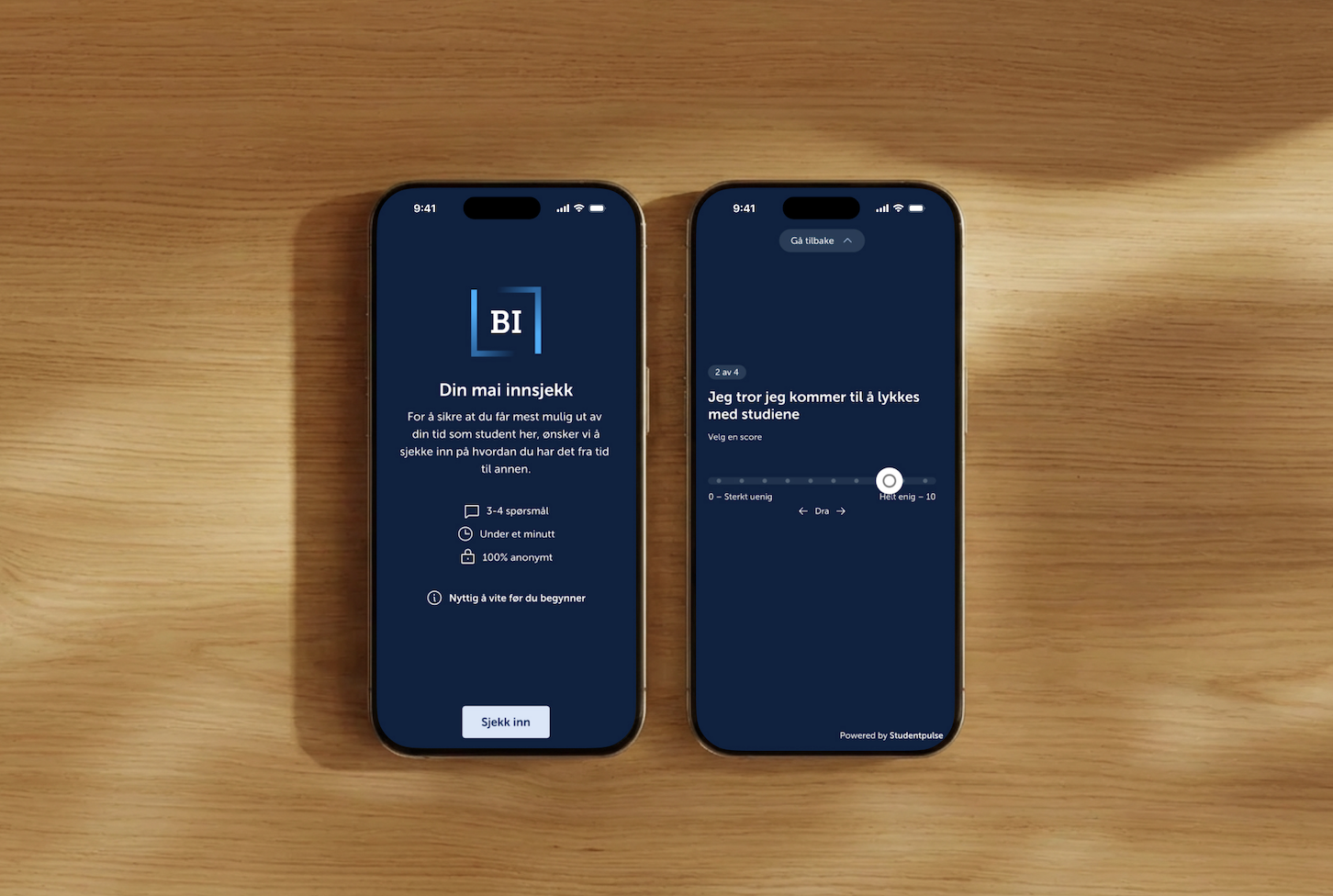
Following a successful pilot program focused on first-year Bachelor students in Oslo, BI has rapidly expanded the initiative. The framework now covers all Bachelor and Master students in Oslo, as well as all online students, moving beyond initial year groups to support the broader student body.
This was never treated as a mere technical implementation. It was an institutional commitment to fulfill a "Duty of Care" by ensuring that a student's request for help does not sit unread in an inbox for weeks.
The transition required navigating internal mindsets to ensure the initiative was embraced as an action-oriented tool. A key success factor was the direct integration of the project into the school’s official strategy. Kasumacic highlights that StudentPulse was introduced as a platform for immediate action rather than just another survey. This was essential in showing the organization that BI is not just collecting data, but actively creating a bridge to support.
This strategic alignment ensures that well-being is not left to chance or individual initiatives, but is a mandated part of BI’s Quality Assurance framework. By integrating StudentPulse into the school’s strategic goals, the leadership has created a formal accountability for student belonging, treating it with the same institutional importance as academic research and teaching excellence.
"Making well-being a core pillar reflects our belief that academic excellence and human flourishing go hand in hand. If students feel seen, supported, and connected, they perform better."
BI’s approach was deliberate and highly visible. Faculty-led engagement played a central role, as BI prioritized promotion during lectures and class sessions. This visibility signals that the student voice matters and that the institution is actively listening.
This internal cultural shift is already yielding results among the staff. As the initiative has matured, the reception from the academic environment has been increasingly positive.
"Several faculty members have taken an interest in the Student Pulse initiative and are contributing to promoting the service towards their students."

The heart of this proactive operating model lies in its ability to reach the passive student who might struggle in silence. By serving support directly to the student the moment they flag a challenge, BI has transformed a digital signal into a genuine human connection.
The StudentPulse platform provides BI with the agility required to offer assistance at the exact moment a student experiences a dip in motivation. By identifying these early indicators of risk, the institution can now facilitate a direct path to the appropriate support services, such as counseling or academic tutoring, with unprecedented precision. This "immediate routing" ensures that the institution lives up to its responsibility to act when students share their struggles.
"Well-being is no longer a support function. We see it as a strategic driver of quality."
Furthermore, these insights act as a catalyst for other vital work at BI, specifically the project "Innovation against isolation". This project aims to develop new concepts and services to strengthen student well-being, proving that digital signals lead to concrete, human-centric innovation. As Kasumacic puts it, well-being is essentially the fuel that enables academic achievement.
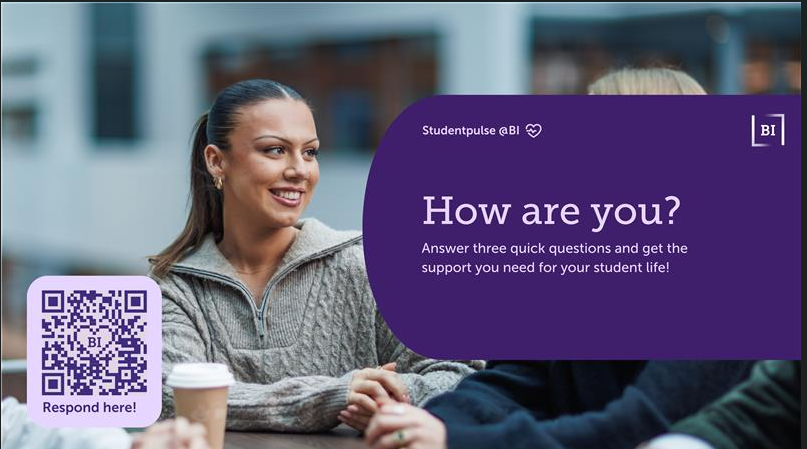
Building on the successful expansion in Oslo and across all online programs, BI is now executing a phased institutional rollout to the remaining campuses. By 2027, the StudentPulse framework will be fully implemented in Bergen, Stavanger, and Trondheim, creating a single and unified well-being pulse for the entire institution.
"The lasting legacy should be a culture where students feel seen and empowered and where data-driven insight strengthens both academic quality and human connection."
The BI case study provides a powerful blueprint for institutions ready to transition from traditional, reactive student support models to a data-driven, proactive well-being strategy. For institutional leaders looking to replicate BI's success and embed well-being into their core operational framework, the following essential steps serve as a practical guide.
BI’s journey proves that when student care is embedded into an institution’s strategic DNA, well-being becomes a primary driver for academic excellence rather than a silent challenge.
Discover how your institution can move from reactive surveys to a proactive operating model:

Read more customer stories


.png)

.png)


